Your Finance Team Is Capable of More Than Manual Processes and Human Spreadsheets
Finance teams are often described as the engine room of a business. They keep the numbers accurate, the cash flowing, and the reporting on time. But in many organizations, a significant portion of that team’s energy goes into tasks that are repetitive, manual, and frankly not a great use of skilled people.
That’s where business process automation comes in. And when it’s applied thoughtfully to finance, the results go well beyond efficiency gains. Done right, automation repositions a finance team from a cost center into something that actively contributes to business growth.
The Problem With Manual Finance Processes
Most finance teams are sitting on processes that haven’t changed much in years. Reports get generated by hand. Invoices are chased through spreadsheets and email threads. Credit control relies on someone remembering to follow up. Reconciliation happens in a mad scramble at month end.
These tasks are necessary, but they don’t need to be manual. And when they are, the cost isn’t just time. Errors creep in. Deadlines get missed. Cash flow suffers. And the finance professionals who should be providing strategic insight spend their days on administration instead.
“When skilled finance people spend their days on administration, the business loses the strategic thinking it’s paying for.”
What Automation Actually Looks Like In Practice
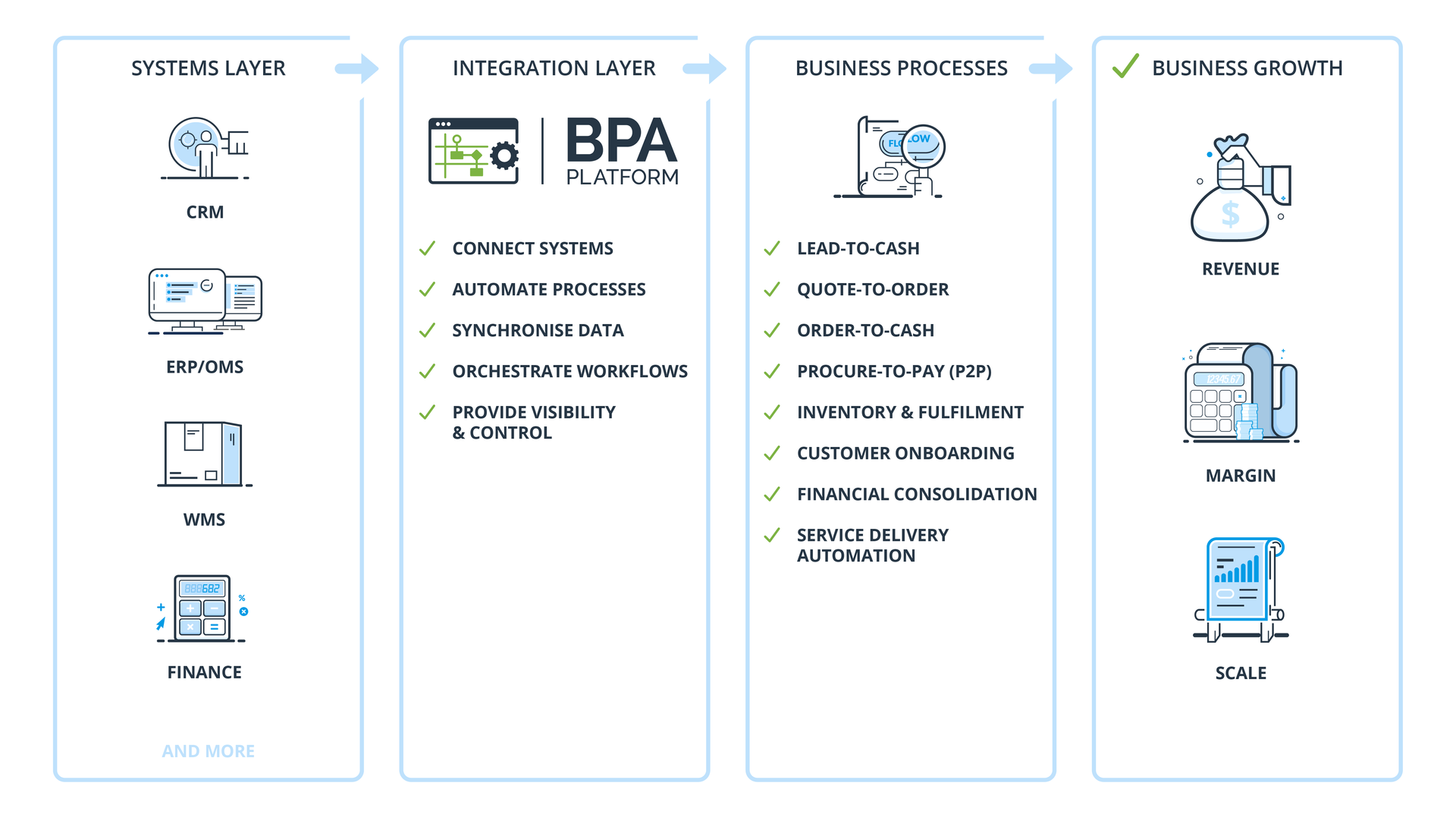
BPA Platform addresses this by automating the repetitive, rule-based work that clogs up finance workflows. That includes the automatic generation and distribution of invoices and statements, automated credit control procedures that send the right communication to the right customer at the right time, purchase order approval workflows that route requests based on value thresholds, and scheduled financial reporting that lands in the right inbox without anyone having to build it.
The platform integrates with the accounting and ERP systems finance teams already use, including Sage, SAP, Microsoft Dynamics, and many others, so there’s no need to rip out existing infrastructure. Automation gets layered on top of what’s already working.
A Real Example: What This Looks Like For A Finance Team
One pattern that comes up consistently across BPA Platform customers is the reporting burden. Finance and operations teams often spend several hours every week manually building, formatting, and distributing reports that nobody has time to question or redesign because they’ve always been done that way.
With BPA Platform’s reporting automation in place, those reports are generated and distributed automatically in real time. The staff time that was going into assembly gets freed up for analysis. Errors that crept in through manual data handling disappear. And the people responsible for financial reporting can focus on what the numbers mean rather than how to produce them.
Codeless Platforms’ customers across industries have seen this play out in reporting, reconciliation, and financial administration. The time savings are consistent, and so is the observation that the real benefit isn’t just the hours recovered. It’s what the team does with them.
Credit Control: Where Automation Directly Protects Cash Flow
One of the highest-impact areas for finance automation is credit control. Late payments are one of the most common causes of cash flow pressure for businesses of all sizes, and most of the time, the problem isn’t that customers won’t pay. It’s that nobody followed up in a consistent, timely way.
BPA Platform can monitor outstanding invoices daily, automatically generating and sending the right communication based on how overdue an account is. An approaching due date triggers a polite reminder. A missed payment triggers a follow-up. An aged debt triggers an alert to the collections team and the relevant account manager simultaneously. The whole process runs without anyone having to track it manually, and nothing falls through the cracks.
For businesses that have implemented this kind of automated credit control, the results tend to show up quickly. Aged debtor times come down. Cash flow becomes more predictable. And the finance team spends less time chasing and more time managing. For businesses that have implemented this kind of automated credit control, the results tend to show up quickly. Aged debtor times come down. Cash flow becomes more predictable. And the finance team spends less time chasing and more time managing.
The Broader Shift: From Reactive To Strategic
The real value of finance automation isn’t just the hours saved, though those matter. It’s what becomes possible when the team has capacity to think rather than just process. Real-time visibility into cash flow. Faster month-end close. Earlier identification of risk. More informed conversations with leadership about where the business stands and where it’s heading.
Finance teams that automate the routine work don’t just get more efficient. They get more valuable to the business. And that’s the transformation worth aiming for.
“Finance teams that automate the routine work don’t just get more efficient. They get more valuable to the business.”
---------------------------------------------------------------------------------------------------------------------------------------------------------------------------------------------------------------------------------------------
Fisher Technology helps organizations across North America implement BPA Platform to streamline finance operations and unlock the full potential of their teams. If you’d like to explore what automation could look like for your finance function, we’d love to talk.
Get in touch: www.fisher-technology.com/contact